
By Idowu Addison

The Chartered Institute of Transport and Logistics (CILT) has set its target on raising the transport sector’s contribution to Nigeria’s Gross Domestic Product (GDP) beyond 4 per cent, calling for a more integrated transport system to drive economic growth.
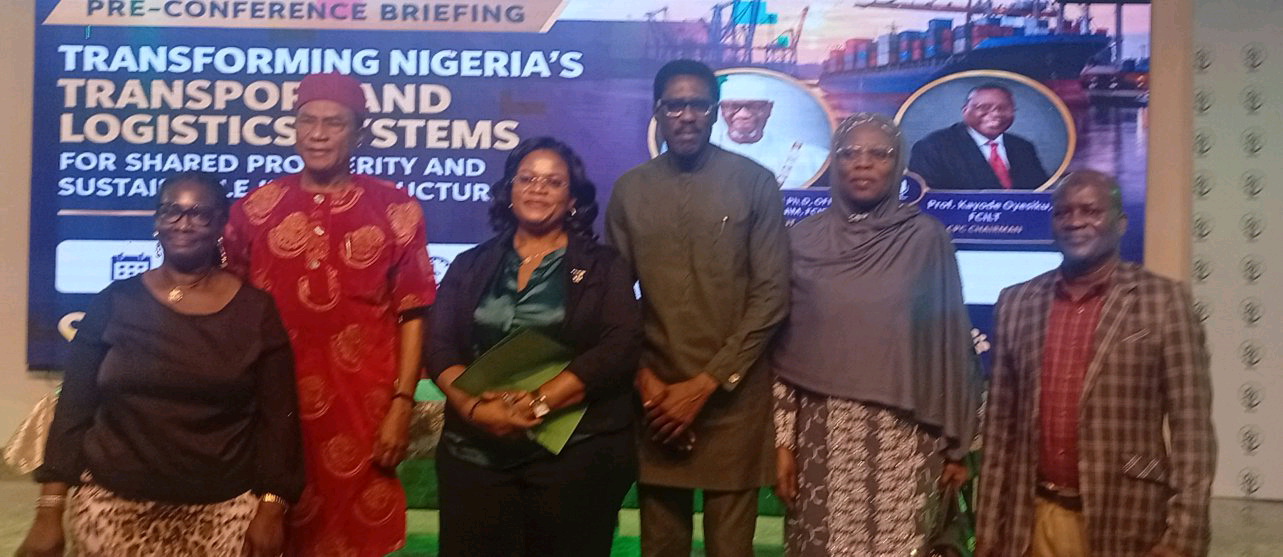
Speaking at Pre-Conference briefing in Lagos yesterday, the Chairman Central Planning Committee for the 2026 conference, Dr. Kayode Oyesiku said that transport and logistics are not merely sectoral concerns adding that they are the circulation system of the national economy.
Oyesiku who was represented by Prof Ogochukwu Ogomma, Dean School of Transport and Logistics at the Lagos State University, also said that when that system is fragmented, unsafe, costly, or unreliable, every household and enterprise pays the price.
“When it works efficiently, the benefits spread through lower costs, stronger productivity, wider market access, simpler job, and business opportunities.” He stated.
According to Oyesiku, Nigeria therefore needs more than isolated projects. We need an integrated system in which road, rail, aviation, maritime transport, inland waterways, ports, terminals, logistics hubs, and last-mile services reinforce one another.
“We also need infrastructure that can withstand climate change, institutions that coordinate effectively, technology that improves visibility and accountability, and a skilled workforce that can manage a rapidly changing industry.”
He explained that the conference with the theme “Transforming Nigeria’s Transport and Logistics system for shared prosperity and sustainable Infrastructure” has been designed for solution, adding that the 2026 National Conference, has been deliberately structured as a solution-focused gathering as It will bring policymakers into direct conversation with regulators, with the operators, with the investors, the academia, technology providers, development partners, students, and young professionals.
The purpose according to him is not simply to restate the familiar problems in Nigeria. It seeks to identify priorities, clarify responsibilities, and build partnerships that can move credible ideas towards implementation


