
By Oluwabunmi Ogunjimi
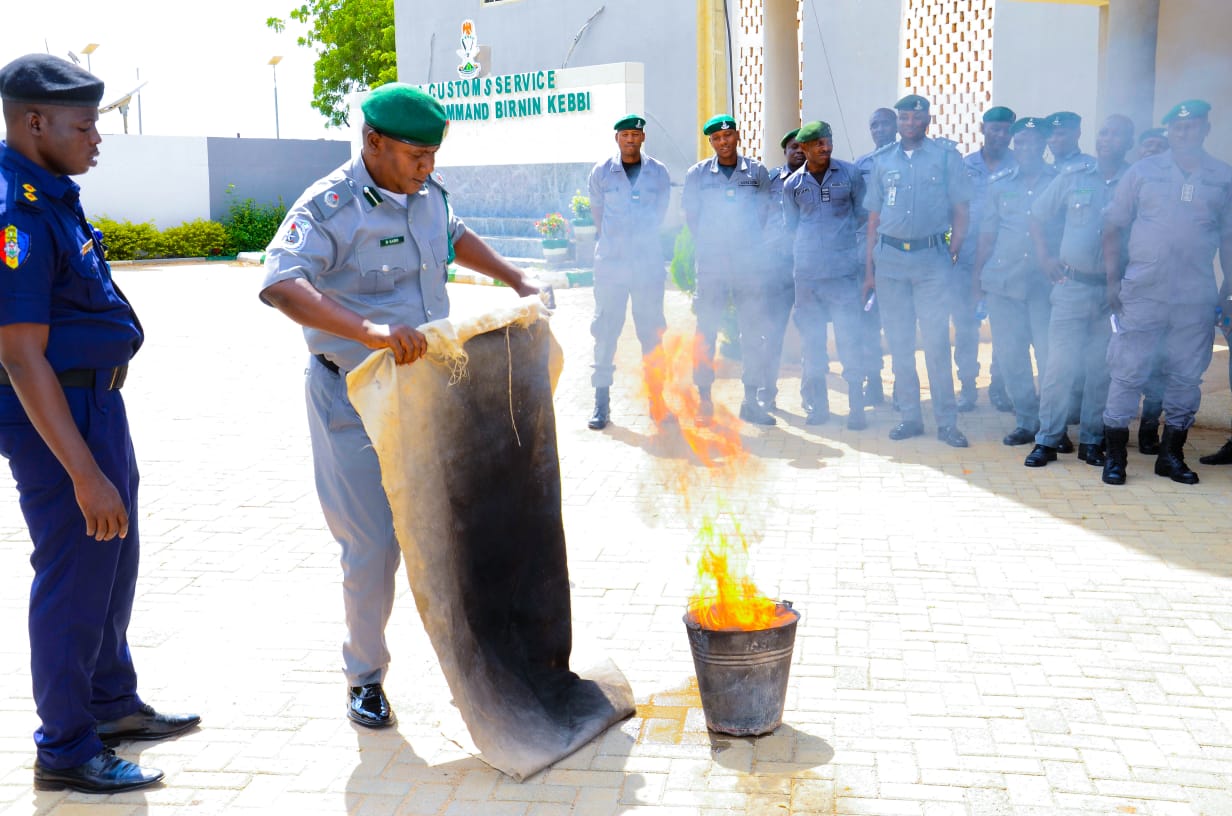
The Kebbi Area Command of the Nigeria Customs Service (NCS) has strengthened its emergency preparedness with a basic firefighting and fire extinguisher drill conducted in collaboration with the Federal Fire Service (FFS).
The training, held yesterday at the Command Headquarters in Birnin Kebbi, was designed to equip officers and men with practical knowledge and skills for preventing fires and containing outbreaks at the incipient stage.
The exercise was chaired by Deputy Comptroller of Customs Ibrahim Yusuf, who represented the Customs Area Controller, Comptroller Mahmoud Matawalle Ibrahim.
It was facilitated by Deputy Superintendent of Fire Kabiru Muhammad and his team of co-facilitators, with senior officers and personnel of the Command in attendance.
Speaking at the event, Yusuf stressed that fire safety should be regarded as a collective responsibility, noting that fires could occur without warning and that timely intervention could prevent a minor incident from escalating into a major disaster.
The resource person, Deputy Superintendent Muhammad, also described fire safety as a shared responsibility involving building owners and managers, employees, occupants and professional firefighters.
He commended the Customs Area Controller for providing the necessary firefighting equipment and supporting the training, urging participants to take the lessons seriously and apply them whenever the need arises.
Participants were trained on the causes and prevention of fire, principles of fire extinction and the correct use of fire extinguishers, fire blankets and fire buckets.
The programme also featured a practical demonstration, allowing officers and men to operate firefighting equipment under the supervision of fire safety professionals.
The Command urged participants to share the knowledge acquired with their families and communities, stressing that the ability to respond promptly and appropriately to a fire outbreak at its early stage could save lives and protect property.

