
By Fruzzy Wuzzy
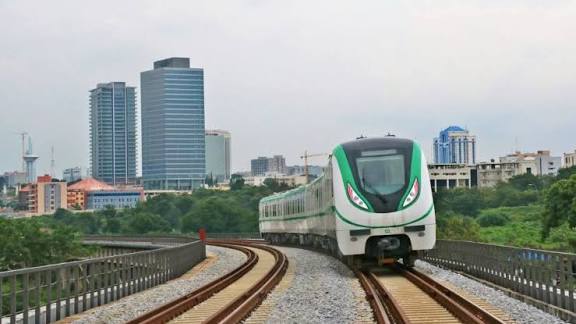
Nigeria is set to witness a new era of rail transportation as the Federal Government prepares to launch a comprehensive National Railway Development Roadmap aimed at linking all 36 states and the Federal Capital Territory through a unified rail network.
The initiative, which aligns with the government’s agenda on infrastructural development, is designed to open up the nation’s transport corridors for seamless movement of goods and people, while giving state governments greater autonomy to participate in rail development.
Under the new framework, states will be able to access and operate on the national rail corridors at no additional cost — a move made possible by recent legislative reforms that placed railway development on the concurrent legislative list.
Lagos and Plateau states have already begun leveraging this opportunity, while others such as Ogun, Oyo, Edo, Delta, Kogi, Kaduna, Kano and Niger are being encouraged to follow suit, taking advantage of the existing narrow and standard gauge lines that cut across their territories.
According to the Managing Director of the Nigerian Railway Corporation (NRC), Dr. Kayode Opeifa, the roadmap is a key component of Nigeria’s transport transformation strategy. Speaking at the Seventh National Transport Conference of the Chartered Institute of Transport Administration (CIOTA) in Abuja, Opeifa noted that the plan seeks to unlock state-level participation in rail operations, expand freight movement, and deepen economic integration across the country.
He explained that the NRC’s current freight operations have grown significantly, with increased rail haulage of containerized cargo, cement, gypsum, soda ash, metal coils, and materials for the AKK Pipeline Project.
Looking ahead, Opeifa said the Corporation’s Vision 2-5-10-20 development plan will drive optimization of national rail assets within two years, transition to electric traction by year five, double rail capacity in ten years, and expand Nigeria’s network to at least 60,000 kilometers over the next two decades.
With this roadmap, Nigeria appears poised to reposition its rail sector as the backbone of an integrated transport system and a key enabler of regional economic growth.


